RESEARCH IN THE HISTORY OF EVERYDAY LIFE AND PRESERVATION OF FAMILY MEMORY THROUGH PERSONAL PHOTO AND VIDEO DOCUMENTS
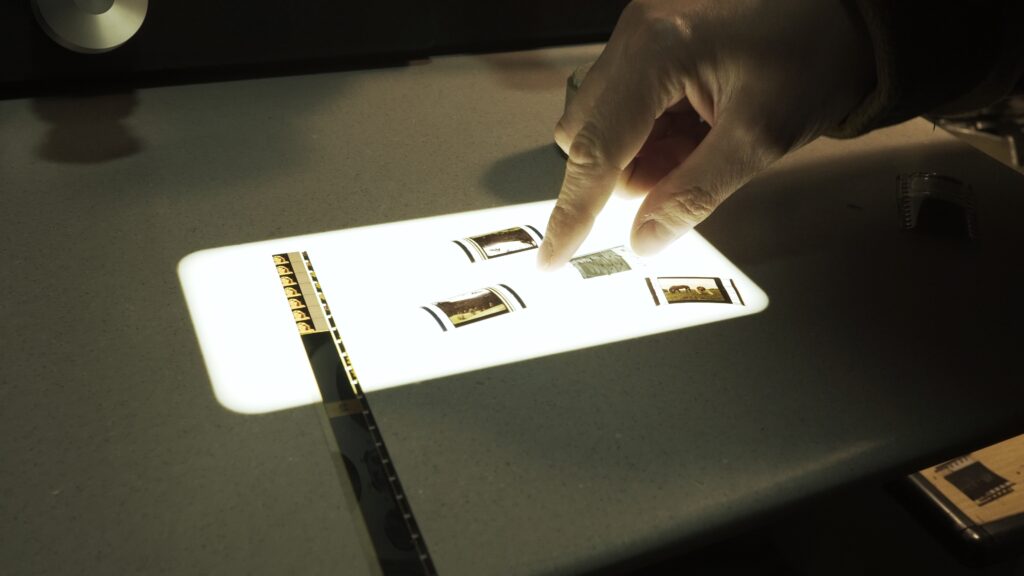
Why are archives and the study of private photo and video documents needed? These issues are poorly represented in belarusian historical science and artistic research. The main attention is paid to social and economic factors, primarily of the history of BSSR as part of the “Union”. The Soviet attitude towards the study of “global” things, large historical processes, continues to operate. Microhistory and the history of everyday life, which in themselves are modern directions that appeared in the second half of the 20th century, are not popular among Belarusian researchers.
If some personal documents of the past are studied, then this mainly concerns the history of prominent figures, as well as famous people. The memory of the everyday life of individual citizens, who have their own, albeit not global, but unusually important world worthy of attention, is not always of interest to Belarusian researchers. Nevertheless, evidence of the routine personal life of people is of great value, reflecting the traditions and rituals of the entire society as a whole. The study of everyday life allows, among other things, to gain knowledge about everyday life, living conditions, diet, as well as about the socio-political preferences of people and factors that influence the formation of consciousness and norms of behavior.
The same is true of microhistory, which takes its roots from social history and the “school of the Annals”. It is worth talking a little about the relationship of the “school of the Annals” to the topic of this text. This direction was the first among historians to characterize a historical source as “everything that a person says or writes, everything that he produces, everything that he touches” (1, p. 39). This definition contributed to a change in the perception of the human being in history, and in the subsequent desire of historians to look for the motivations, thoughts, and feelings of each actor, regardless of origin and social status.
Against this background, it is worth paying attention to where these areas of historical research are developed at a high level. In the case of this article, this is Hungary.
Hungarian historical science, after the establishment of the communist regime in power in 1948-49, was transferred to the rails that suited the new government. The state apparatus of the HPR (Hungarian People’s Republic) closely monitored that researchers clearly adhered to the party line and did not deviate from it, and the nature of the research was primarily “exposing the capitalist system”. The situation persisted for a long time, but after the Hungarian uprising of 1956 and the “normalization” that came with the new communist leadership led by János Kádár, the opportunities for freer action expanded, and not only in terms of historical research, but also in everyday life, as well as in cultural activities. Naturally, open deviation from the “party line” was still punished, but the restrictions were clearly relaxed, allowing cultural activity to open up new horizons and researchers to explore new, previously inaccessible sources.

translation of the text of the newspaper article on the creation of the PFFA
“Family photographs and films have an exceptional value for national self-knowledge and are part of the national tradition. The preservation and collection of these photographs, photo albums and films represents an extraordinary expansion of knowledge about our past and present, and also contributes to the preservation and restoration of the values of private life.
We must not allow precious memories of past times, photographs, albums, filmstrips, as well as the descriptions and stories associated with them, to be lost! We must ensure that they take their rightful place! Think about how our national tradition grows as more and more documents are archived.”
One of the most striking developments that emerged from the Hungarian transformation was the Private Photo and Film Archive Foundation (PFFA). In 1982, the Privát Fotó és Film Kutatócsoport (Private Photography and Film Research Group) was established in a state-run scientific institution called the Művelődéskutatási Intézet (Cultural Research Institute, MÜKI) under the leadership of the famous Hungarian sociologist, philosopher and folk art researcher Iván Vitányi, which was later transformed into the PFFA. This project developed in collaboration with András Bán and Péter Forgács, who sought to systematically collect both private photographs and films.
András Bán, despite the fact that he graduated from the Eötvös Loránd University with a degree in mathematics, had been actively involved in cultural research, including visual culture, since his university days. He worked for many well-known Hungarian magazines and newspapers, where he wrote mainly about photography. The second person who stood at the origins of the Group is Péter Forgács. Like Bán, he is not a professional researcher with an education, but a person who works with visual means of expression. Having received his education as a drawing teacher, Forgács is engaged in independent filmmaking and describes himself as an “archaeologist of memory”.
Bán and Forgács sought to create a place that preserves, processes and exhibits personal memories, while at the same time creating a research center that supports research and education in the field of visual culture and the history of everyday life. The main inspiration was Sándor Kardás’ private photo collection called the Horus Archive, which collected amateur photography, and the experimental documentary film Private History (1978) by Gábor Bodí and Peter Timar (5).
The main interest of the Fund’s creators was not to explore the binary of amateur and professional art, but to the specific visual characteristics of personal images: the method of production, the quality, and what was specifically shown. The Fund’s creators were also interested in the act of self-documentation, the use of images to demonstrate their immediate environment. This allowed them to understand what was essential for the creators to record, and as a result, showed what they considered important in their lives. It was through this collection and preservation of video documents of personal origin, as well as their gradual use in research, that these historical sources (and the fund as a whole) were established as a valuable resource for interdisciplinary research and a crucial element of national heritage.
In addition to preserving the sources, PFFA researchers conducted oral interviews with the filmmakers who donated their personal recordings, as well as with their relatives. This was done to gain contextual details about the history of the creation of the photo/video recordings(4). The interviews were particularly concerned with the life experiences of the creators, while also encouraging them to reflect on their practice of recording the everyday. Although the main object of preservation was visual materials, other donations (family genealogies, film diaries, and memorabilia related to memories of filmmaking) were also encouraged. The Group’s chosen field of visual anthropology, the process of gathering information, and the interviewing of archive participants led Bán and Forgács to an understanding of the ethnographic knowledge transmitted by amateur media, which contributed to the further development of already academic research in this field.
During the research process, about 500 hours of 8 mm video footage and more than 250,000 family photographs from the early 20th century to 1988 were archived. Bán and Forgács were able to obtain government funding for their research, as well as to advertise in newspapers to establish a collection at their institute. Much of the history of amateur photography and film had already been lost in the previous years due to war and post-war disdain from the official research community. In this regard, the PFFA gave priority to finding and collecting pre-war family photo albums and home movies up to 1960. These were the most fragile and rare records, and the organization did not have the resources to collect and, most importantly, process all the available materials (2). Through their collaboration with the state-owned Fővárosi Fotó Vállalat (“Budapest Municipal Photo Company”), they also collected contemporary photographs, which were used as material for analyzing the socialist value system.
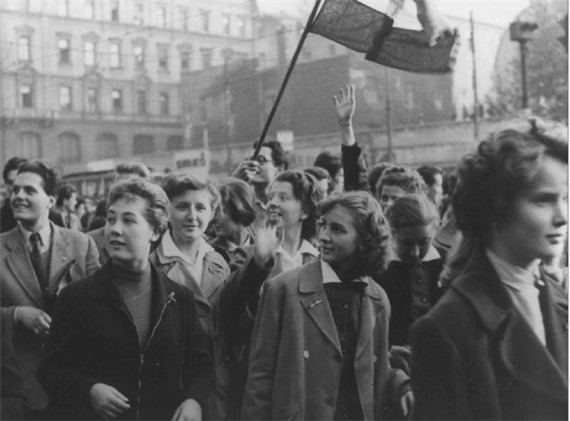
Bán and Forgács were among the first in the world (and in the Eastern Bloc countries before anyone else) to realize the importance of getting to know everyday culture, which would have been inaccessible without the collection and archiving of family photo and film recordings. For them, the personal meant a clear opposition to the public, and thus to official historical narratives. By focusing on personal history, the Group showed the previously “invisible” life of the common man, which did not make it into textbooks. This was a response to the forced modernization of the Kádár era: to raise the standard of awareness of everyday history and to gather knowledge for the study of both the past and the present. PFFA’s work with private documents allowed for the restoration of individuality and the reassessment of “comrade citizens” in private individuals. By departing from official narratives, the Group made a valuable contribution to the rethinking of Hungarian history and the transformation of national self-consciousness. Thus, the work of the Group not only marked the beginning of an alternative historiography and research, but also offered new ways of evaluating, using and reflecting on amateur media heritage. This archive also set a standard at an international level, as private recordings only acquired archival interest and value later, in the 1990s.
After the change of regime and the withdrawal of state funding, the MÜKI gradually ceased its activities and was faced with the dispersal of all its institutional records, research and publications. This meant the end of academic research and publications at the PFFA, but not for its other activities. The archive became a separate fund, primarily collecting home movies and interviewing their creators or relatives. Furthermore, during the period of PFFA’s active work, private recordings became popular thanks to Forgác’s series “Private Hungary”, which reworks footage to reflect on previously unresolved Hungarian traumas of the past century: the establishment of the proto-fascist regime of Miklós Horthy, World War II, the Holocaust, the post-war turbulence and the establishment of the harsh communist regime of Rákosz, the Hungarian Revolution of 1956, and, finally, the “normalization” of the János Kádár era.
In the face of the changes and uncertainties of the post-socialist era, the PFFA holdings were transferred to the Blinken OSA (Vera and Donald Blinken Open Society Archives) in the late 1990s (3). This archive was established at the Central European University in 1995. The archive’s collection is mainly devoted to the Cold War period and human rights, and includes materials on the history of the former Eastern Bloc, samizdat, the history of propaganda and war crimes.
Although the collection of additional private materials has slowed since the PFFA came under the wing of the Blinken OSA, archival processing and artistic processing of the diverse holdings continue. Today, the private films, as well as the audio interviews and their transcriptions, have been digitized and are available to the public in the Blinken Research Room of the OSA, together with Forgác’s numerous feature documentaries based on private recordings.
The fact that we can encounter Hungarian private media sources created between 1925 and 1985, let alone study them, is the result of the enormous work carried out by the PFFA. This fund has opened up the horizons of amateur and visual media studies, exploring the convergence of official and private historical records. Through close interaction with this unique collection, we can understand how the consumer value of private films reveals tensions and differences between everyday and official, private and public, significant and insignificant records, and ultimately shapes and structures perceptions of the past.
It is also impossible not to mention the influence on the future of historical research that the PFFA had. The archive was the first in the countries of the socialist bloc to pay attention to materials of personal origin and to collect and systematize them. Having set the rules and methods for collecting and processing such archival documents, the PFFA became an example of work for other researchers, both professionals and amateurs. A great advantage of the organization was that its origins were not professional historians, but rather amateurs who were not directly related to historical science in their field of activity, which allowed them to avoid some bias in relation to private sources of knowledge about everyday traditions and rituals. Despite its obscurity in the academic environment of Eastern Europe at the time of the archive’s creation, the work of Bán and Forgács became one of the motivation for the increased interest in microhistory and the history of everyday life in the following decades.

Collecting personal sources, not only photos and videos, is incredibly important, both for family memory and for the history of society in general. Working with private materials is essential for a better understanding of what unique view the creators of such materials had of the world that surrounded them every day, as well as what perception they had of everyday life. Materials that were created for reporting purposes, be it statistical documentation or sociological surveys, were often heavily edited to meet certain needs of higher authorities. Such sources do not allow us to thoroughly explore the everyday life of a certain historical period (be it the beginning of the 20th century, the era of Stalinism, The “Thaw”, “Zastoi”, or “Perestroika”). Official media materials also do not allow us to get to know the inner world of an “ordinary” person, which is not so ordinary and actually quite unusual, even amazing, and at the same time unique. Therefore, the collection and processing of private documents is an important and promising task for the future, which should be worked on not only by contemporaries, but also by the next generation of researchers, artists, writers, filmmakers, and those interested in research that requires the use of very personal sources.
List of sources used:
1.Блок М. Апология истории или ремесло историка. Пер. Е. Лысенко. М., 1986.
2. Alternativ történelem a Privát Fotó es Film Alapítványon keresztül — Forrás: https://osaarchivum.444.hu/2021/10/29/alternativ-tortenelem-a-privat-foto-es-film-alapitvanyon-keresztu
3. Blinken OSA Archivum: https://archivum.org/hu
4. HU OSA 320 Photographs and Home Movie Collection of Privát Fotó és Film Alapítvány: https://catalog.archivum.org/catalog/jDe85Vzb
5. Privát történelem — NFI: https://nfi.hu/alapfilmek-1/alapfilmek-filmek/dokumentumfilm/privat-tortenelem.html
6. Vitányi Iván: https://www.parlament.hu/kepviselo/elet/v047.htm
reprinting or other use of the material only with the written consent of the editorial team of kalyska.archive
Пакінуць адказ